

Your joints communicate constantly. A twinge when you climb stairs, stiffness that lingers after you get out of bed, a faint grinding sensation when you bend your knee — these aren’t random inconveniences. They’re early signals that the structures keeping your joints functional may be under stress. Catching those signals early can make a real difference in how well you protect your mobility long-term.
Most people dismiss these warning signs for months or even years, chalking them up to tiredness, aging, or a minor strain. By the time they seek medical attention, the deterioration has often progressed further than it needed to. This guide covers what to watch for, why each symptom happens, which joints are most vulnerable, and when to take action.
What Joint Deterioration Actually Means
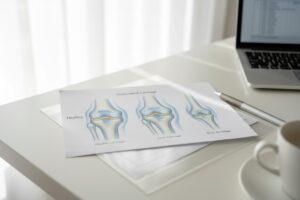
Joint deterioration describes the breakdown of structures that allow joints to move smoothly and absorb load. The primary target is cartilage, the smooth, resilient tissue cushioning the ends of bones. As cartilage degrades, bones lose their protective buffer, leading to friction, inflammation, and structural changes over time.
Osteoarthritis is the most commonly discussed form, but it isn’t the only one. Inflammatory arthritis (including rheumatoid and psoriatic arthritis) attacks joints through an immune-driven process rather than mechanical wear. Post-traumatic joint degeneration follows injury, sometimes years later, while gout causes damage through uric acid crystal deposits. Each type shares some early warning signs but has distinct patterns worth recognizing.
The Core Early Warning Signs
According to board-certified orthopedic surgeon Dr. Sean Thompson, “The earliest warning signs often include joint stiffness, mild pain during movement, swelling, and reduced flexibility in affected joints.” These four signals appear consistently across clinical presentations and are the ones most worth tracking carefully.
Morning Stiffness That Overstays Its Welcome
Morning stiffness is one of the earliest and most universal indicators of joint deterioration. The mechanism involves synovial fluid, the lubricant that keeps joints moving freely. During sleep or inactivity, this fluid thickens and loses some of its shock-absorbing capacity, which is why the Mayo Clinic notes that joint stiffness is most noticeable upon awakening or after being inactive.
The key benchmark is duration. Stiffness resolving within five to ten minutes is typically normal. Stiffness persisting longer than 15 to 30 minutes is one of the earliest measurable indicators of joint deterioration. If you’re consistently taking half an hour to feel fully mobile after waking, that threshold matters.
One useful distinction: in osteoarthritis, morning stiffness is usually brief, under 30 minutes. In inflammatory arthritis like rheumatoid arthritis, stiffness often lasts one to two hours or longer. This difference is a helpful early differentiator when reporting symptoms to a doctor.
Pain During or After Movement
Early joint pain tends to be activity-triggered rather than constant. You might feel discomfort in your knee after climbing stairs, notice hip aching after a long walk, or experience shoulder pain after reaching overhead. This happens because deteriorating cartilage no longer absorbs load effectively, placing mechanical stress directly on the underlying bone and surrounding tissue.
The National Institute of Arthritis and Musculoskeletal and Skin Diseases (NIAMS) notes that people with joint deterioration “usually have joint pain and, after rest or inactivity, stiffness for a short period of time.” In early stages, pain often resolves with rest, which is why many people dismiss it. The concern arises when rest no longer provides reliable relief, or the threshold for triggering pain keeps lowering.
Resting pain, pain that wakes you at night, or pain with no clear mechanical trigger warrants prompt medical evaluation.
Swelling and What It Tells You
Swelling around a joint is easy to notice but often misunderstood. Not all joint swelling is the same, and distinguishing between types provides useful diagnostic information.
Synovial effusion: Fluid accumulation within the joint capsule, often described as a “water on the knee” sensation; typically feels soft and fluctuant.
Bony swelling: Results from osteophytes (bone spurs) forming at joint margins, producing a harder, more fixed enlargement.
Soft tissue inflammation: Involves surrounding tendons, bursae, or ligaments and may present as diffuse puffiness or warmth. Warmth and redness alongside swelling point more toward inflammatory causes rather than mechanical wear.
Crepitus: When Joints Make Noise
Crepitus refers to cracking, popping, grinding, or crunching sensations during joint movement. It occurs when cartilage surfaces become irregular or thinned, causing rough contact between joint structures. Gas bubble release within joint fluid can also produce popping sounds, which is generally benign.
The distinction worth knowing: painless, occasional popping without other symptoms is rarely a concern. Grinding sensations accompanied by pain, or crepitus that has developed progressively alongside stiffness or swelling, suggests cartilage degradation is underway. Knee crepitus during squatting or stair-climbing, in particular, is one of the six early warning signs of knee osteoarthritis that clinicians consider clinically significant.
Reduced Range of Motion
When you can’t bend your knee as far as you used to, or turning your head feels noticeably restricted, it signals joint changes that go beyond simple muscle tightness. As cartilage breaks down and the joint capsule thickens in response to inflammation, movement becomes limited and often mildly uncomfortable at end range.
A simple self-check: can you perform a full, pain-free squat? Reach your arm fully overhead without discomfort? Rotate your neck to look over each shoulder with equal ease? Asymmetry, gradual restriction, or pain at end range are meaningful findings worth tracking over time.
Joint-by-Joint: Where Deterioration Shows Up First
Different joints produce distinct early patterns. Recognizing site-specific signals improves self-identification.
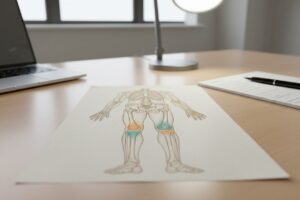
- Knees: Pain during stair climbing or rising from a chair, a sensation of instability, visible puffiness around the kneecap, and crepitus during bending
- Hips: Deep groin ache or outer hip discomfort during walking, difficulty putting on shoes, reduced stride length, or pain after prolonged sitting
- Hands and fingers: Bony nodules near the finger joints, morning finger stiffness, weakened grip strength, and aching after handwriting or gripping tools
- Shoulders: Pain when reaching overhead or behind the back, a grinding sensation during arm rotation, difficulty sleeping on the affected side
- Spine (facet joints): Morning stiffness in the lower back or neck, localized aching that eases with gentle movement, and radiating discomfort if nerve roots are involved
Who Is Most at Risk
Risk factors for joint deterioration split into two categories: those you can influence and those you can’t.
Non-modifiable factors include age (cartilage repair capacity declines after 35 to 40), genetics (a family history of arthritis meaningfully raises your risk), sex (women are more susceptible to osteoarthritis, especially after menopause), and prior joint injuries, even those that healed seemingly well. Post-traumatic joint degeneration can appear a decade or more after the original injury.
Modifiable factors include body weight (each pound adds roughly four pounds of force across the knee during walking), physical inactivity, repetitive occupational joint loading, and poor movement mechanics. Smoking has also been linked to increased cartilage breakdown, particularly in the spine.
Joint deterioration can begin in your 20s or 30s. Post-traumatic degeneration, inflammatory arthritis, and hypermobility-related wear can all affect younger adults, typically tied to past sports injuries, autoimmune conditions, or occupational strain rather than age-related wear.
Can Early Deterioration Be Reversed?
This is one of the most common questions, and the honest answer is nuanced. True cartilage regeneration is limited; the body doesn’t readily rebuild cartilage once it has degraded. That said, early intervention can meaningfully slow progression, reduce inflammation, restore functional movement, and keep the joint stable for many additional years before any invasive treatment becomes necessary.
The window for conservative management is widest in early-stage deterioration. This is the phase where physical therapy, targeted exercise, weight management, and dietary changes deliver the greatest return. Waiting until symptoms are severe significantly narrows your options.
Evidence-Based Prevention and Early Management
The most effective strategies for protecting joint health have solid research backing.
- Low-impact exercise with strength focus. Swimming, cycling, and walking preserve joint mobility while building the muscle support that unloads the joint surface. Quadriceps strengthening, in particular, reduces compressive forces on the knee significantly.
- Weight management. Even a modest 5 to 10 percent reduction in body weight reduces knee joint load measurably and has been shown to lower pain scores in early osteoarthritis.
- Anti-inflammatory nutrition. Diets rich in omega-3 fatty acids, polyphenols (berries, leafy greens, olive oil), and low in processed sugars help modulate the low-grade inflammation that accelerates cartilage breakdown.
- Supplements with clinical backing. Glucosamine and chondroitin have generally supportive evidence for symptom reduction in mild-to-moderate osteoarthritis. Collagen peptides and vitamin D also have emerging research support for joint health.
- Sleep and recovery. Inadequate sleep elevates systemic inflammation, which directly affects joint tissue repair cycles.
If you’re researching specific products to support joint health alongside these lifestyle strategies, a dedicated joint health supplement review can help you evaluate options with clinical context.
When to See a Doctor and What to Expect
Some symptoms warrant a medical appointment without delay. Morning stiffness consistently exceeding 30 minutes, joint swelling that is warm, red, or accompanied by fever, pain that interrupts sleep, rapid loss of range of motion over weeks, asymmetric joint involvement, or symptoms appearing in multiple joints simultaneously all fall into this category.
For symptoms that have been present a few weeks and are gradually worsening, a primary care visit is the right first step. Your doctor can order baseline imaging (X-ray to assess joint space) and blood tests, including inflammatory markers like CRP and ESR. If those findings suggest inflammatory arthritis or more complex pathology, a rheumatologist referral follows. Orthopedic referral is more appropriate when mechanical joint damage is confirmed.
When you see your doctor, be specific. Note how long stiffness lasts in the morning, which activities trigger pain, whether swelling is intermittent or constant, and whether symptoms are progressing. That level of detail significantly improves diagnostic efficiency.

Self-Assessment: A Simple Starting Protocol
Before your appointment, a brief home assessment helps you establish a baseline and communicate clearly with your provider.
Morning stiffness timer: On three consecutive mornings, time how long it takes from getting out of bed until all joint stiffness has resolved. Record each result.
Squat test: Perform a controlled squat to 90 degrees (chair height). Note any pain, limitation, or crepitus, and compare left and right sides.
Grip strength check: Firmly squeeze a rolled towel or soft ball. Note any pain, weakness, or asymmetry between hands.
Range of motion comparison: For each affected joint, compare active movement side to side. A meaningful asymmetry of more than 15 to 20 degrees is worth reporting.
Tracking these indicators weekly gives you and your doctor a functional picture of how symptoms are evolving, which is far more informative than a single snapshot at one appointment.
Why People Wait Too Long
One underaddressed aspect of early joint deterioration is the psychological response to first symptoms. Denial is common, particularly among active individuals who associate joint problems with aging or physical limitation they’re not ready to accept. Anxiety about what a diagnosis might mean for lifestyle or work can also drive avoidance.
The result is that many people live with actionable early symptoms for one to three years before seeking evaluation. Given that early intervention is where outcomes are best, that delay carries a real cost. Treating early joint deterioration as a maintenance issue, similar to addressing any structural problem before it worsens, is a more useful frame than viewing it as inevitable decline.
Recognizing the early signs of joint deterioration is one of the highest-leverage things you can do for long-term mobility. The gap between “early and manageable” and “advanced and harder to treat” is navigated largely by how quickly you move from noticing symptoms to taking them seriously. Your joints are communicating; the goal is simply to start listening before the signal gets louder.
For those researching specific products designed to support joint health during this early window, our comprehensive joint support supplement guide covers the formulas most worth considering based on ingredient evidence and clinical backing.



0 comments